December 31st, 2015

Dental floss is similar to a lot of products that depend mainly on the consumer’s preference. Fact is, floss comes in a wide variety of flavors, coatings, and other variations, but all types of floss essentially do the same thing. After all, that is what is most important: that the dental floss you buy is functional—cleaning the areas in between your teeth. If you want to know what the best dental floss is, the answer is the kind that enables you to successfully and regularly clean those areas. So to help you find the right type of floss for you, here are some options.
Flavored Dental Floss
Many people that floss prefer a flavored dental floss because it freshens their breath even more than unscented floss. The latter can also take on the smells associated with bacteria in your mouth. And we all know how bad that can be. So, if flavored dental floss is what you prefer, and it allows you to floss your teeth regularly, then it is automatically best for your mouth.
Flossers
There are also products on the market called flossers, which usually consist of a plastic instrument with strung floss and a pick on the opposite end. This option can be both effective at cleaning the areas in between your teeth and scraping off plaque. These flossers also come flavored in mint and various other varieties.
Gentle Dental Floss
Some people find that typical dental floss is too harsh on their gums. For that reason some companies make floss with soft coatings that are less abrasive on the gums. For the most part these types of floss are just as effective as regular floss, and for those people that require a more sensitive approach to flossing, especially when just starting out, this is the best option.
Of the aforementioned options, it is difficult to name an absolute best type of floss. However, Dr. Neil Oliveira and Dr. Derek Wolkowicz and our team say that the type of floss that works best for you, giving you the greatest chance of succeeding at regular flossing, is the best. For more information on floss, contact our New Bedford or Mattapoisett, MA office.
December 24th, 2015

Two-phase orthodontic treatment involves two separate and distinct periods that your child receives orthodontic treatment. It allows your son or daughter to begin early treatment of bite and jaw problems, in order to reduce the dental issues he or she experiences later on.
Two-phase orthodontic treatment with Dr. Neil Oliveira and Dr. Derek Wolkowicz can improve how well the second phase of the treatment works and helps to make room for permanent teeth. Overall, two-phase treatment helps to position the teeth and the jaw for an attractive profile. Our team at Orthodontic Specialists of Southeastern Massachusetts recommends that you bring your child to our New Bedford or Mattapoisett, MA office at the age of seven or eight, so that Dr. Neil Oliveira and Dr. Derek Wolkowicz can determine if early (Phase-One) treatment is necessary.
Phase-One
Phase-One orthodontic treatment is known as early treatment. It begins shortly after your child’s first orthodontic examination, usually around age eight or nine. The main goal of Phase-One orthodontic treatment is to help make room for permanent teeth, which reduces crooked teeth as a result of overcrowding. It treats the jaw and bite growth, and issues like crossbite or underbite. This can reduce the need for your child to undergo extractions.
Phase-Two
Phase-Two orthodontic treatment is when braces are placed on the upper and/or lower teeth. The purpose is not just to correct spaces or misaligned teeth, but also to correct overbite or underbite concerns. Phase-Two usually begins around age 11 or 12, and the braces are worn for an average of two to three years, depending on your child’s unique needs. Some children have fewer issues and wear braces for little more than a year, while others need them for up to four years.
Signs your child needs two-phase orthodontic treatment
If your child exhibits the following signs, he or she may be a good candidate for two-phase orthodontic treatment:
- Losing baby teeth early, before five years of age
- Problems with biting or chewing
- Sucking the thumb after age five
- Evidence of a crossbite, where the teeth don’t come together when opening or closing of the mouth
- Teeth are crowded at age seven or eight
- Protruding teeth on the top or bottom
Not all children need to have early treatment, but if your child shows any of these signs, you should bring him or her to us for an evaluation at Orthodontic Specialists of Southeastern Massachusetts.
December 17th, 2015
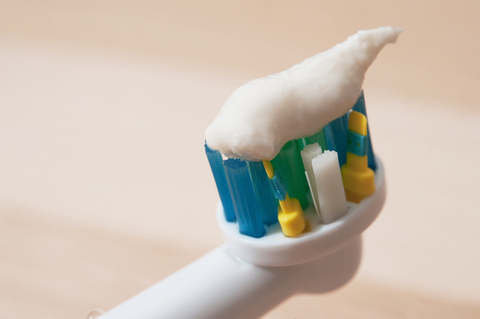
Our team at Orthodontic Specialists of Southeastern Massachusetts knows that there are many ways you can protect your pearly whites throughout your orthodontic treatment. If you follow the rules and brush your teeth twice a day, floss often, and protect your appliances from damage, you should have a successful treatment.
But did you know there’s another way to keep your teeth sparkling and healthy during your time wearing braces?
Fluoride, the mineral that helps you prevent cavities and tooth decay, can also help keep your teeth strong. Fluoride comes in two varieties: topical and systemic. Depending on your oral health or the recommendation of Dr. Neil Oliveira and Dr. Derek Wolkowicz, you may be required to have a fluoride treatment every three, six, or 12 months. We may also prescribe a fluoride product such as a mouthwash, gel, or antibacterial rinse for at-home treatment to keep your teeth happy in between visits.
If you have any other questions about fluoride or your treatment, please don’t hesitate to give us a call!
December 10th, 2015

Dr. Neil Oliveira and Dr. Derek Wolkowicz and our team hear this question a lot. Some of the common reasons for crooked teeth include:
- Thumb sucking
- Tongue thrusting or improper use of the tongue during speaking and swallowing
- Premature loss of baby teeth, which causes teeth to drift and shift
- Poor breathing airway caused by enlarged adenoids or tonsils
There are also hereditary factors we get from our parents, like:
- Extra teeth
- Large teeth
- Missing teeth
- Wide spaces between teeth
- Small jaws
Dr. Neil Oliveira and Dr. Derek Wolkowicz and our team know that having crooked teeth isn’t just a cosmetic issue; it can lead to serious health problems as well. Crooked teeth can:
- Interfere with proper chewing
- Make keeping teeth clean more of a challenge, increasing the risk of tooth decay, cavities, and gingivitis
- Strain the teeth, jaws, and muscles, increasing the risk of breaking a tooth
There are several treatment options we offer at Orthodontic Specialists of Southeastern Massachusetts that can help correct crooked teeth. Please give us a call at our convenient New Bedford or Mattapoisett, MA office to learn more or to schedule an initial consultation.